
Understanding the spectrum of movement disorders that affect millions worldwide
What is Parkinsonism?
Understanding Parkinsonism
Parkinsonism is an umbrella term used to describe a group of neurological disorders that cause movement problems similar to those seen in Parkinson’s disease. The term encompasses both Parkinson’s disease itself and several related conditions known as atypical or Parkinson-plus syndromes.
These disorders share common symptoms including tremor, muscle rigidity, slow movement (bradykinesia), and postural instability. However, each condition has unique features that distinguish it from classical Parkinson’s disease, and they often require different treatment approaches.
Understanding the differences between these conditions is crucial for accurate diagnosis, appropriate treatment, and realistic expectations about disease progression and outcomes.
The Parkinsonism Family Tree
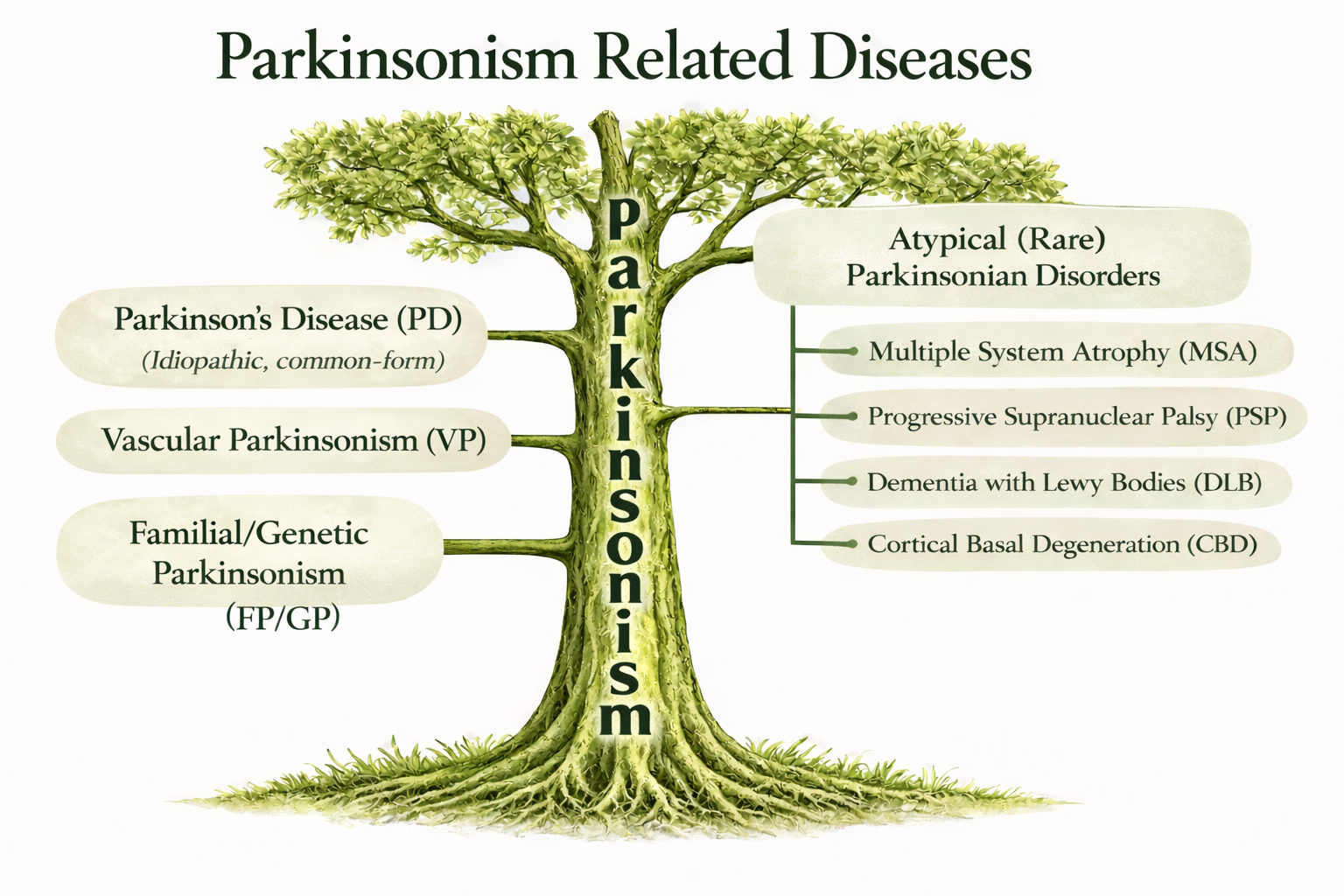
Atypical (Rare) Parkinson’s Related Disorders